

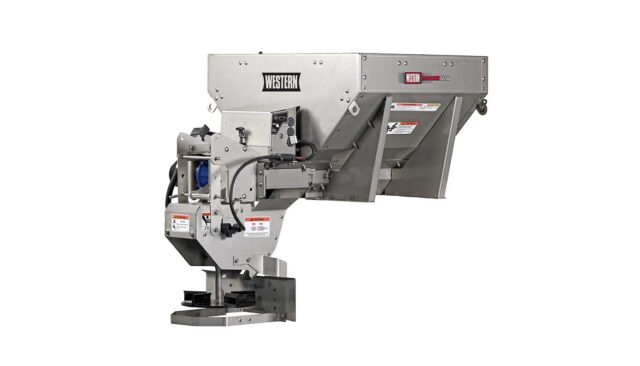
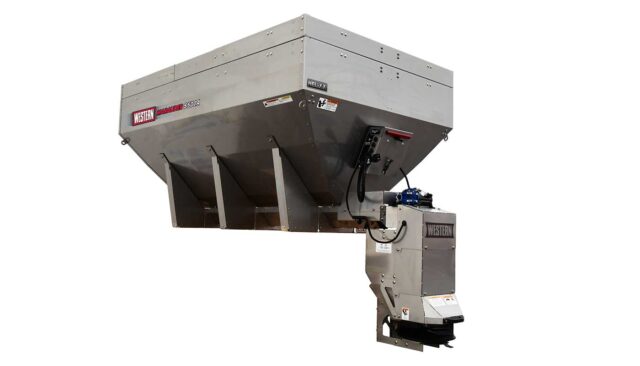
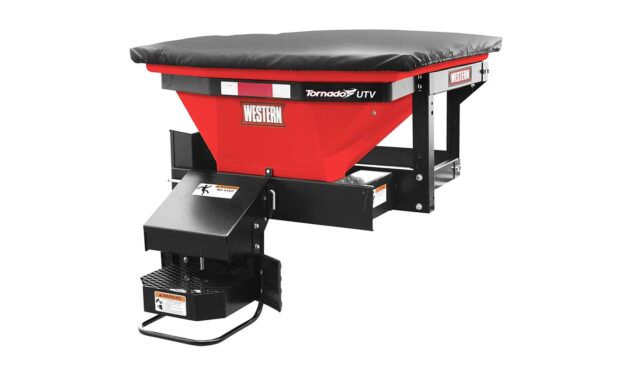
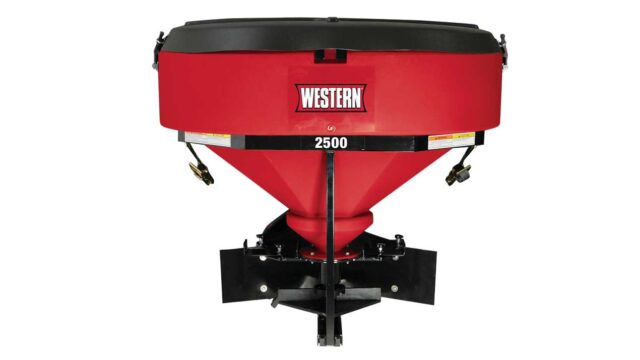
Tornado™ Hopper Spreader Inspection, Maintenance, and Operational Testing [VIDEO]
Created May 16, 2022
Performing a pre-season inspection is the most effective way to ensure equipment uptime and eliminate mid-season stress. By taking the time to inspect, lubricate, and test your WESTERN® Tornado™ hopper spreader before the first storm hits, you ensure your machine is ready to perform when conditions are at their worst.
Note: Always consult your vehicle and spreader owner’s manuals for specific safety procedures before beginning any maintenance.
Mechanical Inspection & Lubrication
Regular lubrication is the key to longevity. Before each use, ensure all bearings and chains are well-lubricated.
- Conveyor Chain Tension: With the spreader in the upright position, grasp the chain. You should see 1–3 inches of deflection when pushing back and forth. Adjust via the take-up bolts if necessary.
- Drive Motor Chain: This should have a 1/4 inch of deflection. Adjust by loosening the motor bolts and sliding the motor to the desired position.
- Gearbox Maintenance: Change the gear oil annually using Mobil SHC 632, Exxon SHP 320, or an equivalent gear oil to prevent moisture buildup.
- Secure Mounting: Do not rely on tie-downs alone. Ensure the spreader is bolted directly to the vehicle frame per the manufacturer’s guidelines. Use a front-sill spacer on pickup trucks to prevent the unit from shifting forward.
Electrical System Integrity
Electrical issues are a leading cause of downtime. A thorough inspection of your harness and battery connections is essential:
- Battery Connections: Ensure cables are connected directly to the battery. Check for loose or corroded terminals, clean them if necessary, and apply dielectric grease (#49326).
- Fuse Check: Inspect the 100-amp fuse. If it is blown, do not attempt to bypass it; take the spreader to an authorized dealer for diagnostics.
- Harness Protection: Routinely inspect all electrical harnesses to ensure they are secure and routed away from heat sources, sharp edges, or moving vehicle parts.
- Corrosion Prevention: Use electrical contact cleaner to remove debris from connectors, then reapply dielectric grease after each use throughout the season.
Final Operational Test
Once installation and maintenance are complete, perform a test run:
Functionality: Verify that the high-mounted stop light is working and that all lids and feed gate adjustments operate smoothly.
System Check: Start the vehicle and turn on the spreader control. A series of two beeps indicates the unit is empty. If you receive a different code, consult your owner’s manual for troubleshooting.